Misir Wot and PCOS: How a Traditional Ethiopian Stew Can Fit into a Gentle, Balanced Lifestyle
- Sneha Parikh
- Dec 12, 2025
- 6 min read

Updated: Feb 22
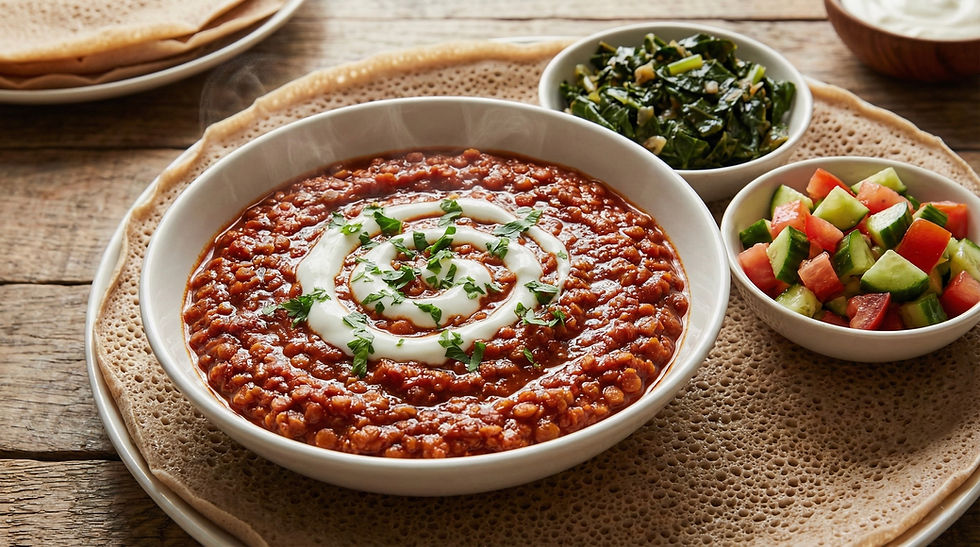
Because healing doesn’t always come from a prescription — sometimes it comes from a warm pot simmering on the stove.
When Food Feels Like Home Again
Come into the kitchen with me for a moment.
Not the noisy, rushed kitchen of modern life — but the slow, fragrant kind where onions soften patiently, spices bloom gently in oil, and time itself seems to slow down.
For generations, people didn’t separate food from care. They didn’t count macros or scroll for diet trends. They simply noticed how certain meals made them feel — lighter, calmer, steadier, more alive.
Today, many women living with PCOS (Polycystic Ovary Syndrome) feel disconnected from that simplicity. We are told what to avoid more than what to enjoy. Carbs become the enemy. Flavor becomes suspicious. Comfort becomes guilt.
And somewhere along the way, eating stops feeling joyful.
This is where Misir Wot enters the story.
Misir Wot is a traditional Ethiopian red lentil stew. It is deeply spiced, richly colored, and profoundly comforting. To some, it is just a recipe. To others, it is memory, culture, and care in a bowl.
And for women trying to build a kinder relationship with their bodies, it can be something even more:
a reminder that nourishment and pleasure can coexist.
A Gentle Note About PCOS and Food
Before we go further, let’s say this clearly and kindly:
PCOS is complex. Every body is different. No single food cures or treats it.
But food can support lifestyle balance. It can comfort digestion. It can stabilize energy. It can reduce stress around eating. And sometimes, that is just as powerful.
This article is not about treatment.
It is about choice, warmth, culture, and balance.
Why Traditional Foods Still Matter
Modern nutrition often focuses on numbers. Traditional cooking focuses on feeling.
Ethiopian cuisine, in particular, is built around:
• Slow cooking
• Plant-based proteins
• Fermented foods
• Deep spice layering
• Shared meals
These principles naturally support digestive comfort, satiety, and satisfaction — things many women with PCOS struggle to find in restrictive diets.
Misir Wot is a beautiful example of this wisdom.
What Makes Misir Wot So Special?
Misir Wot is made primarily from split red lentils, onions, garlic, ginger, and a spice blend called Berbere.
It is:
• Naturally plant-based
• Rich in fiber and protein
• Comfortingly thick and filling
• Bold without being heavy
• Deeply aromatic
But beyond nutrition, it offers something emotional:
a sense of grounding.
Lentils: The Quiet Comfort Food
Red lentils cook quickly and soften into a creamy texture. They are gentle on digestion for many people and naturally satisfying.
For many women with PCOS, meals that combine fiber and protein help avoid the sudden hunger crashes that lead to constant snacking.
Lentils do not demand perfection.
They simply offer steadiness.
Onions: The Slow Magic Ingredient
Traditional Misir Wot uses a generous amount of onions — not for sharpness, but for sweetness.
When cooked slowly, onions melt into the base of the stew, creating depth without heaviness. This slow cooking also makes the dish easier on the stomach.
It is a reminder that good things take time.
Berbere: A Cultural Spice Story
Berbere is not just a spice blend. It is a cultural signature.
Every Ethiopian household has its own version. Some are hotter. Some are sweeter. Some are deeply smoky.
It often includes:
• Chili
• Ginger
• Fenugreek
• Garlic
• Coriander
• Nigella seeds
Together, they create warmth without bitterness.
Not aggressive heat — but comforting fire.
Why This Matters for a PCOS Lifestyle
Women with PCOS often feel trapped between extremes:
Eat too light → feel unsatisfied
Eat too heavy → feel uncomfortable
Misir Wot sits gently in the middle.
It is filling without being greasy.
Bold without being overwhelming.
Comforting without being dull.
It teaches balance without preaching.
A Recipe Passed Through Patience
This recipe is not rushed food.
It is patient food.
Authentic Ethiopian-Style Misir Wot (Gentle Home Version)
Prep Time: 20 minutes
Cook Time: 50 minutes
Servings: 4–6
Ingredients
Base:
2 cups split red lentils, rinsed well
4 large red onions, finely chopped
Aromatics:
1 tbsp minced garlic
1 tbsp grated ginger
Spices:
3–5 tbsp Berbere spice blend
½ tsp cardamom
½ tsp cumin
Liquids:
4–5 cups vegetable broth or water
Fat:
3 tbsp olive oil or traditional spiced butter
Seasoning:
Salt to taste
Step-by-Step Cooking
1. The Onion Foundation
Place onions in a heavy pot over medium heat without oil.
Let them slowly release their water and soften for about 15 minutes.
This step builds natural sweetness.
2. Add the Fat
Once onions look soft and lightly golden, add oil or butter.
Stir until rich and aromatic.
3. Wake the Aromatics
Add garlic and ginger.
Stir gently for one minute.
4. Bloom the Berbere
Add the Berbere spice.
Cook for two minutes so the spices release their fragrance.
5. Lentils Enter
Add lentils and broth.
Bring to a gentle boil, then reduce heat.
6. The Long Simmer
Let simmer uncovered for 30 minutes.
Stir occasionally.
The stew should become thick, smooth, and velvety.
7. Final Touch
Turn off heat.
Stir in cardamom, cumin, and salt.
Cover and rest for 10 minutes.
This resting time is where flavor deepens.
How Ethiopians Traditionally Serve It
Misir Wot is served on Injera, a fermented flatbread made from teff.
Teff is:
• Naturally gluten-free
• Rich in iron
• Fermented for gut comfort
If Injera is unavailable, enjoy Misir Wot with:
• Millet
• Quinoa
• Brown rice
• Or even lightly steamed vegetables
Building a PCOS-Friendly Plate
A balanced plate could look like:
• A scoop of Misir Wot
• A portion of whole grain or millet
• A side of fresh vegetables
• A drizzle of olive oil or tahini
This creates satisfaction without heaviness.
Why Many Women Love This Style of Eating
Not because it promises miracles.
But because it:
• Feels steady
• Feels warm
• Feels nourishing
• Feels respectful to the body
The Emotional Side of Eating with PCOS
PCOS is not only physical.
It is emotional.
It affects confidence.
It affects trust in one’s body.
It affects the joy of eating.
Cooking a dish like Misir Wot is an act of patience and kindness. It reminds you that your body deserves warmth, not punishment.
The Real PCOS Scorecard
Not medical.
Not clinical.
But human.
Feeling | Why it matters |
Full but light | Helps break binge cycles |
Warm comfort | Reduces stress eating |
Flavorful | Keeps meals joyful |
Plant-based protein | Supports daily balance |
Slow digestion | Encourages steady energy |
A Small Personal Moment
The first time I made Misir Wot, I almost rushed it.
I had been having one of those weeks where my energy felt unpredictable and my patience felt thin. I stood in the kitchen wondering if I should just cook something quick and “safe” instead.
But I stayed.
I let the onions cook slowly, just as the recipe asked. At first, it felt unnecessary — fifteen minutes just for onions? But as they softened and turned naturally sweet, the kitchen began to feel different. Calmer.
When I added the Berbere, the air filled with warmth. Not sharp heat — but a deep, comforting spice that felt alive. By the time the lentils thickened into a velvety stew, I realized something had shifted.
I wasn’t thinking about restrictions anymore.
I was thinking about care.
When I finally sat down to eat, I felt full — but not heavy. Warm — but not overwhelmed. And for once, I wasn’t negotiating with my plate.
It was just a simple bowl of lentils.
But in that moment, it felt like I had chosen kindness over control.
And that choice stayed with me.
A Gentle Reminder
No food heals PCOS alone.
But every kind meal supports your relationship with yourself.
And sometimes, healing begins with that relationship.
Final Thoughts: Kindness in a Pot
When you cook Misir Wot, you are not just preparing lentils.
You are choosing:
• Patience over rushing
• Flavor over fear
• Culture over restriction
• Warmth over punishment
You are telling your body:
“I am listening to you.”
Let the onions soften slowly.
Let the spices bloom fully.
Let the house smell alive.
And when you sit down to eat, eat without guilt.
Not because the food is perfect —
but because you deserve care.
Disclaimer:
State that blog content is for general information and not professional advice (e.g., medical, legal, financial).


Comments